Friday, 22 March 2013

Stated again...and El Gringo Viejo will probably bring it up again

 ~~~~~~~~~~~~~~~~~~~~~~~~~~~~~~~~~~~~~~~   

It will be said many, many times.   By this speaker.  Written many times before, and a few hundred more times, in what is left of the future for this Cosmic traveller....
 
      We grew up around guns;   our house out on the north edge of McAllen had a 12-gauge, single barrel, HR, single shot.   It had a winchester .410 shotgun, single shot, a .22 hi-standard 9 shot revolver with a 6 inch barrel, a .45 semi-automatic Colt 1911 military, Phillipine era service pistol, and a couple of very accurate CO2 powered,  .22 calibre Crossman pellet rifles, and my mother's little .22 "ladies rifle", a bolt action, single shot barely legal barrel.
     My mother was famous for bing able to shoot white-winged dove in flight with her little rifle...hit them on the fly, she did....without aiming down the sights.   My father could hit a jackrabbit at full run, at 30 yards,    Our workers from Mexico thought that jackrabbit was something edible.  My mother thought that such fare was "animalistic".   My oldest brother and I thought it was pretty good...along with the possum and carp the men would sometimes stew up or fry in lard and strange herbs on a "comal" ....(kind of a Mexican wok, made from a plough disc)....My mother never knew about our "special diet" out in back where the men stayed.
 
     The parking lot at McAllen High School was full of autos.  There were 606 graduating seniors in 1964.  The four-grade secondary was the only secondary in town in those days.  None of the 17 incorporated cities in the four-county Magic Lower Rio Grande Valley, nor their un-related but generally centro-contiguous independent school districts had more than one high school.  Not even Brownsville, the largest of all.  McAllen was the third biggest, and according to everyone in the Valley and Southern Texas...the best city of the lot.
 
     Of those autos, about two-thirds were those of seniors.   Of that number, about ninety percent were driven by spoiled upper-middle class, and well-to-do, conceited brats,  with your humble servant being among the poorest within that general grouping.  In those years, the non-Latin group was still in the vast majority, not only in the schools, but also in the general population.    In those days, there were very, very, very few people on any kind of public assistance....all the Latins spoke English, and about 10% of the non-Latins could speak good to excellent Spanish, and about 40% could understand and make themselves understood to some reasonable degree.
 
     In any regard, in all the trunks, and in various of the glove comparments of the autos in the McHi parking lot....it would be my estimate that 30 to 50 percent of the males' vehicles would have some kind of firearm.   During hunting season, for instance, the "guys" would show off their deer hunting rifles in theschool parking lot...my favourite was Tom Traylor's 30-30 lever action...an actual 1874 model, built in  1892.   It was a piece of mechanical art....and Tom could  drive a #8 Common nail into a 2 X 4  at two-hundred yards.
     El Zorro had the number one most super neato, M - something  carbine, a semi-automatic, self-reloading .22 calibre rifle, of a type that was used by certain pilots in World War II and Korea in case that they survived a crash and found themselves behind enemy lines.   It was a really nice machine...but it was too short of barrel and had to have a special excise tax paid on it.  El Zorro never said whether  his father ever paid that tax, or where the rifle had come from.   My forte was pistols....but that little rifle sure was neat.
 
     But...to the point.  From the time El Gringo Viejo came to Earth until the time we went to Austin....about 17 years...and my bothers...tack on another few years....back to 1936....and then with my father's presence in the same area going back to 1915....we never had a school shooting at McAllen, or any of the schools in the Four County cachement referred to as The Magic Lower Rio Grande Valley of Texas.
     None of us were ever force-fed strange, behaviour-modifying drugs....the forerunners of which had been forced unto people in insane-asylums or in facilities for the severely to profoundly mentally retarded.
 
And that is the name of that tune.
El Gringo Viejo
~~~~~~~~~~~~~~~~~~~~~~~~~~~~~~~~~~~~~~ 

Thursday, 21 March 2013

We have spoken of El Zorro's background....

         This is something of profound interest to people who know and understand history instead of  just knowing  that its something in the past.  This is a monsterous, huge barn that was built to become a home.   Our best estimate would be that it was built in the 1868 - 1875 period.   It was built, obviously, en situs, in extreme North Central Texas....not many miles from the Indian Territory.   When it was built, there were still errant bands and groups of Comanche and Kickapoo, along with smaller and less frequent bands of Kiowa and western Apaches (Mescalero and Chericahua) who would still try to cause a bit of mayhem and destruction.
 
      The Cherokee and Choctaw who were already translocated (Andrew Jackson really was a slug) into the Indian Territory had pretty much turned the White Man into some form of ally, business partner, client, provisioneer, in-law, or some neutral to positive connection to him, his family and his sub-tribe, and nation.   There was still a bit of hostility here and there and now and again, but one can consider the person of Will Rogers to understand the simplicity, complexity, racism and anti-racism among the largely Confederate Cherokee and White groups who lived in that mystical, spooky, noble, harsh, and beautiful land 50 miles either side of the Red River. 


An old homestead home, not far from El Zorro's ultra-modern, ultra-deluxe
Metal Roofed "cabin" a long stone's throw away from this noble old timer.


         This noble structure, as is noted by sight, is made of hewn logs.   The logs are either cypress (sabinal) or pecan/walnut (nogal/ nueces).   The logs were cut and finished by a skillful ax man (or men).  The logs were planked, still something around 3 X 10 X 120 inches and variations.   The heavy planked part starts on a mounted rock pier foundation, and rises up to a height of 10 feet, where it forms the base for a vaulted roof...much less common at the time than one might think when watching re-runs of Bananas, or The Big Valleyhoo".   Each of the long members in the body of the walls probably cost up to 50 dollars gold, silver or Yankee greenbacks if that was all that was available.   Further, it was double-walled, and the space between filled with mud and rock.
      If they were done by El Zorro's collateral family, the ones who owned the home...with two grown men, skilled, working on the logs it  would have taken two to three weeks of steady felling and swinging.    Then, not to mention the draughting or dreyage back to the farmstead.   But delivered from some "big city" within a hundred miles...well, you can imagine just how expensive oats can be.
     Please note, consider that the woman standing by the chimney chamber....probably a tall girl if her descendants are a guide...and it would indicate a stack height of nearly 25 feet.   The bricks seem to be nearly adobe, and might represent the rough and ready work that might be done by a Mexican.   Were it so, he would have plastered it with gypsum, sand, and oyster shell and/or cow bones and/or perhaps finely ground limestone both in the house and all the way up to the mouth of the chimney.   Judging by the probable width, it seems enough to have been a stove, oven, and a hearth because the people at that time, if they could afford it, would make that space so as to enjoy the obvious benefits.   That would include multiple. simultaneous uses, and during the really bitter winter episodes that come down from the north...pleasant warmth for the nearly airtight home.
     Now, we are given to understand that this woman was born to this home, and the auto in the background is a 1955 Ford  in the right, rear background....was built probably 80 Years after the initial construction of the house.
     People in those days would become older, and then move to town, as it was said.  Houses such as these were not treasured so much although they saw a lot of joy and a lot of tragedy.  They were left to fend for themselves pretty much....facing thunderstorms  with large hail, lightening, floods, intense cold, oppressive heat and all such inclemency.   El Zorro says that not much is left, even of the old shell pictured above, beyond some of the walling and the like.  Of course the roof would have been carried off by any 100 mile per hours gust, but all of that would have been when El Zorro was kicking around on the Mexican with El Gringo Viejo in the Magic Lower Rio Grande Valley, in the City of Palms, McAllen, Texas....where you find Elegance on the Border.   It was a terribly good time.
     El Zorro is probably toying with the idea of putting some of the pieces back together...who knows, he's not poor...and he might do a bit of restoration and make a man cave out of the peices...and he says he is going to finally put together the ascendency and descendency of his family....a very interesting family it is.   Figure...esteemed OROGs...that when you hear the name Quanah Parker...what come to mind....google it up...and think that, on many different levels that name, those people, white people made red by captivity and by choice, and red people becoming as much an American as any Virginia or Boston aristocrat, and everything in between....and that house there probably watched and heard much of those goings on.   It was just about six inches away from the dead centre of it all.
 
     Pardon El Gringo Viejo's ramble, but when El Zorro sent this magnificent picture, it was as if I were 5 years old on early Christmas Morning.  My brother, Ph.d. in Cultural Geography, were he alive to-day, would have driven over just to touch the bone of that noble old structure.   Our grandfather built and lived in a sod house for seven years up in Sargent (that's the way it is spelled) County, North Dakota....when he was establishing a fairly large tree stead and grain farm.  But that was also back in the late 1880s and nothing would be left of it now.  It is all just very interesting and pleasant to contemplate.
 
Thanks as usual for your time and interest.   Pray for America.  And for the Texan OROGs, "If at first you don't secede, try try again."
El Gringo Viejo
 
~~~~~~~~~~~~~~~~~~~~~~~~~~~~~~~~~~~~~~~
 
Un mensaje para la atencion de el Senor Ciudadano, Presidente- Generalissimo Antonio Lopez de Santa Anna, "Ya, le quede solamente treinta dias hasta que le pasa el desastre de San Jacinto.  Preparese" 
~~~~~~~~~~~~~~~~~~~~~~~~~~~~~~~~~~~~~~~


Wednesday, 20 March 2013

Our little carport at the Quinta (two weeks ago)

These pictures were just sent up, and they are also dated, about two weeks old now.  We have been advised that the work is completely done now, and they are waiting for my arrival with glossy white paint, because the columns have been thickly and correctly plastered with a finishing grade cement and "porcelana" finish.   Please notice the ceiling of the lower shot, with the cane work.   This allows the carport to "rhyme" with the interior of the home.


Thanks for everyones attention!
El Gringo Viejo

Ahem! AAHHEEmmmm!!! May I have your attention?

~~~~~~~~~~~~~~~~~~~~~~~~~~~~~~~~~~~~    


 Before the second war with Saddam Hussein broke out, some seven weeks in advance of the first bombings, the entire world was in agreement with the fact that Saddam Hussein al Tikriti had substantial reserves of various cannon launched and missile launched weapons and devices of mass destruction.
     It was known, and evidentially proven that he had deployed such weaponry during the Iran - Iraq War that left a staggering one million humans of sorts dead, including battalions of Iraqi children of no more than 12 years of age, who were designated and trained to charge machine gun positions.   This tactic was justified because (1) they were smaller targets (2) since they were children, Allah would take them up without sin and give them a greater life at another time and place, (3) it would reduce casualties among the Iraqi regulars because the Persians would exhaust their ammunition shooting at the waves and hordes of children.
 
     Before people laugh at this silly notion, it was, has been true that  such measures were commonly used among the uncivilised totalitarian regimes throughout ancient and recent history.   The Red Chinese used the tactic...nay, the strategy against both Chung Kai Shek's forces, and later against the Gringos and United Nations troops in Korea.  The North Vietnamese commands used variations of the tactic, and both the Communist Chinese and the North Vietnamese Communist forces gathered up groups and crowds of women and children, purposely, to be placed in front of small but significant infantry manoeuvres.  Most frequently these bullet catchers were drawn from populations known to be friendly to the Gringos and/or anti-communist (Meos, Fundamental Buddhists, Roman Catholics and other Christians, and intellectual anti-communist traditionalists).

     Saddam Hussein used various gasses against his own populations.   Shi'ite and Kurdish opponents of his dictatorship were slaughtered en masse and with intermittent and unpredictable schedule.  Another form of culture torture was, of course, the draining of the marshes and river back-ups and seasonal flood zones of the Swamp Arabs, who had produced excellent vegetable crops for centuries on the floating pads of rich soil.   Saddam caused the swamps, marshes, and river estuaries to be drain, thereby all but destroying the arch-traditional, self-sufficient and noble people that served as an example of the success derived from hard work.

      We return to that period just before the Second Iraq  War began.   Several weeks before the  War,  Saddam Hussein was known to have led the atomic projects inspectors sponsored by the United Nations on wild goose chases, minded by "minders", while certain strange convoys were seen transporting covered loads of something to Syria to the west.    Many of the tractor-trailer rigs had trailers with triple rear axles, used almost exclusively for ultra-heavy loads.    The rigs were waved through at the usually horridly corrupt, extortionist, manipulative border personnel....and DID NOT STOP.   There were an estimated  (low end) 17 or 18, and (high end) up to 35 or 40 of these rigs sent by Saddam Hussein.

        The trucks were conducted to some area within the confines of the Bakaa Valley.    This issue has been looked at, overlooked, studied, denied, supported, discussed, and analysed.  It is certainly the opinion of the important people who count that such an event never occurred.  The Israelis and the Saudis seem to think that there is "something there".  One thing is certain.
      There is a group of people who HATE HEBES.  It is an inborn hatred that comes especially from National Socialists and Communists and elitists.   Much of the inborn hatred comes from atheist, Jew-hating Jews.  Many such Jew hating Jews are found in the broadcast and print media...and of course they are the ones who come up with terms like "neo-conservatives"  as a "dog-whistle" to identify those terrible Jews who think that socialism is bad and that there is a god named Yahweh (Jehovah- same word).
      The Jew-hating Jews...really, really hate Jews who know what the inside of a synagogue looks like....who do stupid things like jump up and down on perfectly good cocktail stems at weddings, who wear funny clothes and say dumb things like "lookit, dollink" and "Hello muddah, hello faddah" and so forth.   They even hate Sandy Koufax.....and they have never seen a screening of "Fiddler on the Roof"  (Hebrew for 'Porgy and Bess').  Their theme song is "Lips that taste Kosher, will never kiss mine". 
      Then there are the Gentiles....like (Sir Edmund) Hillary who discovered that the Jews displaced the poor innocent "Palestinians" and learnt at Wellesly to HATE ISRAEL!!!  And hate Jews in general.  BAD, BAD HEBES,  BAD, BAD ISRAEL...oppressing the poor Palestinians who they displaced.

     If a dumboe traditionalist Episcopalian comes along and says, "Can we not all just get along?  Are we not all sons of Abraham...?"  we are ridiculed with the "dog-whistle" of  snake-handler, rube, hillbilly, intellectually challenged, Southerner, fascist, gun-owner, backwards, anti-Arab, and of course, RACIST!!!!

     NOW, we are met with the greatest Jew-hater of all, Barack Hussein Obama, walking among the 12 tribes.   Nothing good can come of it.   Every step Obama takes obscures  the line between treason and the oath of fielty to the constitutional republic that we were.

     NOW,  we are watching the greatest Arab-haters....Assad, the Muslim Brotherhood,  the regime in Teheran, al Qaeda, Hezbollah, Al Fatah, Jamaz, and the 319,436 other radical Muslim/Arab groups with really strange, stupid names.....continuing to do what they do best.....kill Arabs and Muslims (women and children, first, of course) when there aren't any Jews or Gentiles handy.

      This is not a time to be reasonable with Islamist radicals.  This is a time to be reasonable with ourselves and our stewardship of our own resources.   We could start by withdrawing the forwarding of 250,000,000 dollars to the Muslim Brotherhood in Egypt.   And the tanks and F-16 airplanes.....now.
 
~~~~~~~~~~~~~~~~~~~~~~~~~~~~~~~~~~~~~~~~~~~
 
This brief summary of how a "Goldwater Girl" is re-booted into a marxist robototron at schools that used to be bulwarks of tradition and normalcy.   Reprinted from Wikipedia, because they know that no one will believe you when you say that Hillary Diane Rodham was lobotomised by an atheist Jew-hating-Jew marxist.   The radioactive linkages lead nowhere except to definitions, but Dr. Alan Schechter was an interesting personality.   More on him at some other time, however. 
 
Alan Schechter (born 1936 in a Jewish family) is a Professor Emeritus of Political Science at Wellesley College in Massachusetts. He was educated at Amherst College, where he received his AB, and at Columbia University, where he earned his PhD. He is a distinguished and award-winning political scientist. He was also Hillary Rodham's advisor during her years at Wellesley College and supervised her senior thesis; Susan Estrich's book The Case for Hillary Clinton mentions her experience also writing an honors thesis for Professor Schechter (at a different time). He remains involved with the college, running the Wellesley in Washington internship program, in which Rodham participated as a student and which continues to send approximately twenty women to Washington for internships each summer. Professor Schechter is the former Chairman, Vice-Chairman, and member of the J. William Fulbright Foreign Scholarship Board (Fulbright Program), a Presidential appointment.


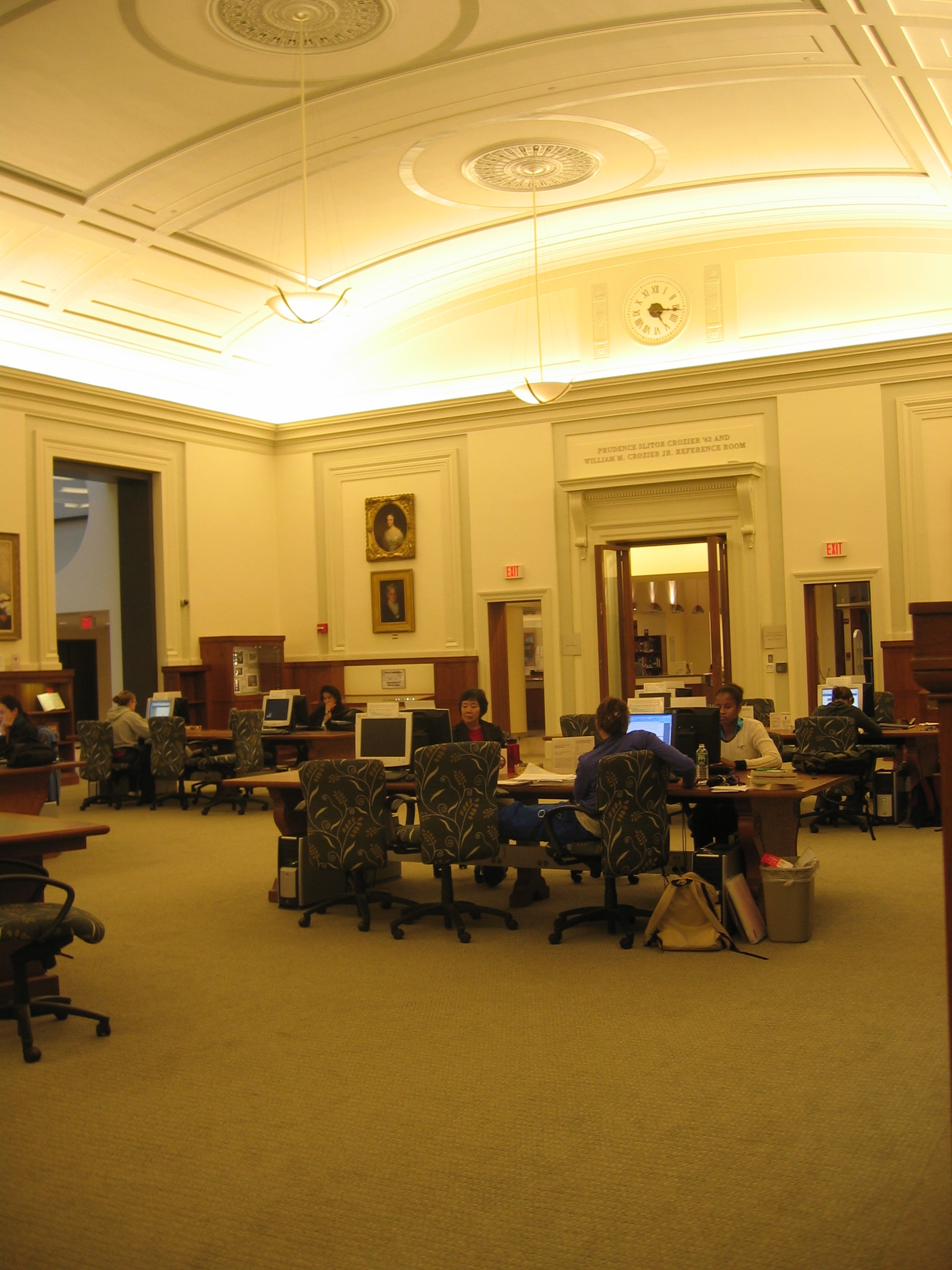
File:Wellesley College Library.jpg
Where the left sides of brains
are de-activated.  Wellesly
College Library
 
~~~~~~~~~~~~~~~~~~~~~~~~~~~~~~~~~~~~~~~~~~~~~~~~~~
 
 
That should do it.   Pardon the inflammatory nature of our beginning of the day.  The Republic is burning and the low-information, low-intelligence, obsolete-media, male-lesbian, left-handed, Eskimos are riding around our circled wagons shooting their child-safe, lo-cal, non-fat arrows.   They really look silly wearing those safety helmets.
El Gringo Viejo
~~~~~~~~~~~~~~~~~~~~~~~~~~~~~~~~~~~~~~~~

Tuesday, 19 March 2013

More Realistic and Full Truth Reportage

EXERPTED FROM Americas  Quarterly

Dispatches from the Field: Ciudad Juárez


Civic and economic life is coming back to a city once synonymous with gangland murders and violence against women.
In this issue:
A tranquil park in front of the Catedral de Nuestra Senora de Guadalupe
in downtown Ciudad Juarez, Chihuahua
 

Dispatches from the Field: Ciudad Juárez

Joseph J. Kolb

Documenting the return of civic and economic normalcy to a city under siege.
Civic and economic life is coming back to a city once synonymous with gangland murders and violence against women.

     The lunch shift is in full swing at Viva Juárez restaurant. After a morning of shopping, pedestrians trickle into the popular eatery on Avenida Benito Juárez, where cooks chop onions and peppers at a formica counter and the aroma of carnitas wafts onto the sidewalk.    The mood inside Viva Juárez and on the nearby streets is relaxed. But the bullet holes in the peeled and faded burnt-orange façade of the nearby Del Pueblo restaurant, closed down after a shooting, are stark reminders of the city’s recent history as the “Murder Capital of the World.”

     Since 2006, Chihuahua state statistics show that more than 10,000 people were murdered in Ciudad Juárez during former President Felipe Calderón’s war on drugs. According to the Ciudad Juárez Chamber of Commerce, an estimated 10,000 businesses closed their doors because of extortion by street gangs, and city officials say that 100,000 residents fled the city to El Paso, Texas, or to other parts of Mexico. Even before Mexican security forces began a crackdown on drug cartels, Ciudad Juárez received international attention for the murder and disappearance of women.

      Yet, since 2011, a guarded sense of normalcy has returned, and many citizens feel Ciudad Juárez is getting a second chance. In 2011, the murder rate plummeted 45 percent—from a high of 3,622 homicides in 2010 down to 1,976 the next year. That number was on track for another 40 percent drop by the end of 2012.
An explanation for the decrease in murders is elusive.

       Ciudad Juárez Mayor Héctor Murguía credits Julián Leyzaola, whom he hired as municipal chief of police in 2011. According to Murguía, the hard-charging but controversial Leyzaola—who has also received significant negative attention for alleged police abuses against suspects—cleaned up Tijuana before moving on to Ciudad Juárez, where he has attempted to instill a new degree of professionalism in the municipal police department, weed out corrupt officers, and establish a community-oriented style of policing. Key to Leyzaola’s crime-fighting strategy was establishing patrol sectors and shifting resources to high-crime areas.

     But there is another explanation, says Jorge Villa, the state medical examiner. “There just isn’t anyone else to kill.”
    The four-year battle between the Juárez and Sinaloa cartels for control of the so-called “Juárez Drug Plaza”—and control of drug routes into the U.S.—has wound down now that the Sinaloa cartel is widely considered to have defeated the Juárez cartel in a brutal turf war.


Life After Wartime

     For the residents of Ciudad Juárez, the reasons and explanations for the drop in violence are irrelevant as long as they can live peacefully again.    Marguirite, a college student who declined to give her last name to avoid being targeted by extortionists, says her family has owned the popular Viva Juárez restaurant, just down the block from the Paseo del Norte Bridge that connects Juárez and El Paso, for 20 years. They survived the dark days of 2008 through 2010, when murder and extortion were at their peak.

     “People are coming back to Juárez from El Paso, and people from Juárez are coming out of their houses again, no longer afraid,” she says. “Things are getting so much better that my family has opened a second restaurant here.”


     Meanwhile, Alberto Calvo, a middle-aged man folding T-shirts in the downtown souvenir shop Mexico Lindo, notes business has improved since Juárez’ crime rate started going down, but times are still tough.
After all, it is the American tourism dollar that helps sustain his business, and Calvo’s shop is on a block that thousands of Americans would have passed on their way to local dentists and pharmacies, many of which are now either closed or scaled back because of the drop in business.

      “I am just surviving,” he admits.

     Still, U.S. tourists are slowly returning to the city, thanks to the lower murder rate and a greater confidence in security. It’s a development that city and state officials hope to capitalize on with a massive physical and image overhaul.   Combined municipal, state and federal investments in Ciudad Juárez have been the cornerstone of the revival, according to Murguía, who is enjoying a second non-consecutive term as mayor after a first term from 2004–2007. The reason for the reinvestment is simple economic survival, Murguía says. He and Chihuahua Governor César Duarte hope to return Ciudad Juárez to the commercial and manufacturing hub it promised to be in the early days of the North American Free Trade Agreement (NAFTA).

     Construction crews are beginning a $300 million project to improve the city’s bone-jarring roads and reduce choking traffic jams. New red and white seats have been installed in the $15 million baseball stadium for the city’s professional team, the Indios, which opened in November 2012. Even nightclubs that were once closed are reopening.

     Murguía said he is especially excited about the urban renewal project planned for the decaying downtown shopping district, which involves demolishing vacant and hazardous structures and transforming the area into a large pedestrian plaza like those found in Mexico City, Monterrey and Guadalajara, to bring back U.S. tourists and shoppers.

     These projects are projected to create 24,000 new jobs over the next year, chipping away at the city’s unemployment rate of 6.4 percent—nearly 1.5 percentage points above the Mexican national average.
The number of export sector jobs jumped from 166,000 in June 2009 to 215,000 in June 2012, an increase of nearly 30 percent. Trade between Ciudad Juárez and neighboring El Paso jumped to $80 billion in 2011, an increase of $10 billion from the previous year.
     “The government is interested in restoring not just buildings, but social and family life for the citizens of Juárez,” said a spokesman for Governor Duarte.   That may be the more daunting task for city and state officials.


Developing the Economy
Even with the work currently in progress, the majority of jobs in Ciudad Juárez are extremely low-paying, keeping the poverty rate high. Murguía says that as many as 65 percent of Ciudad Juárez’ 1.2 million residents lives in poverty. The majority of export, construction and manufacturing jobs pay the equivalent of $55 per week.

     “We don’t want the cheap labor jobs, we want high-skilled, high-paying jobs coming here,” Murguía says. “It can be done. We have so many of our youth attending U.S. universities such as UTEP [the University of Texas–El Paso]. This will allow them to stay here and contribute.”
    

      Moira Murphy-Aguilar, a professor at the Center for Inter-American and Border Studies at UTEP, lived in Ciudad Juárez for about a decade and is optimistic about the city’s future.
     “Juárez has been, since I first lived there in the early 1990s, a vibrant city,” Murphy-Aguilar says. “What people forget, for example, is that Juárez is home to a campus of the Tecnológico de Monterrey, one of the best universities in the world, which also has a stellar middle and high school.”
     Murphy-Aguilar believes that Ciudad Juárez’ infrastructure was unable to cope with the accelerated population growth of the early 1990s, contributing to the poverty it must now overcome to become a modern, developed city. During the 1990s, the promise of maquiladora jobs attracted some 100,000 people from southern and central Mexico, but the city was unprepared for this influx of people, says Murguía. Most of the new residents were forced to live in colonias that did not have infrastructure or adequate housing—and were then stranded without jobs when many of the maquilas closed or downsized. Many still live in bare cinderblock or wood pallet homes with tin or tarp roofs.


     Regardless of the social and economic improvements on Juárez’ horizon, it’s the image of violence that the city has to overcome if it wants to regain the American tourism dollar.     Across the border, it’s clear Juarez’ renaissance remains unpersuasive.
     Bobby Vee, 30, an assistant manager at a cigar lounge in downtown El Paso, says that Ciudad Juárez was always an option for Americans who wanted to cross the border for dinner or to visit nightclubs, but that changed when the violence increased. He says that now very few people from El Paso, including himself, venture across the border, and he doesn’t plan to for the foreseeable future.   He believes that many U.S. citizens remain influenced by media portrayals of the city as a cauldron of crime.

     Murguía concedes the point. “We do have an image problem—people fear that as soon as they walk off the bridge into the city, they will be shot—it is a big challenge,” he says. “But we need our citizens to be our spokespeople and invite others to come to Juárez.”
     Marguirite, an accounting major at UTEP, could be one such spokesperson, but not yet.   Her family’s businesses are flourishing on both sides of the border, including a growing potato chip business in El Paso, and she may go there instead—an option the majority of impoverished Ciudad Juárez residents don’t have.
Still, at a Catholic church in the western colonia of Anapra, a zone of cinderblock houses with tin and tarp roofs, a 16-year-old girl at a youth group concert displays the spirit of defiant optimism that Ciudad Juárez will need to stage a true comeback.
“If I ever had the chance to go to the U.S., I would still stay here,” she says. “How can I make my city better off if I leave?”

View a slideshow of Ciudad Juárez. Photos courtesy of Joseph Kolb and REUTERS/Jose Luis Gonzalez

http://www.flickr.com//photos/americasquarterly/sets/72157632465562038/show/
 

Perfectly Useless Corrupt Liar

~~~~~~~~~~~~~~~~~~~~~~~~~~~~~~~~~~~~~~~~~~~

BREAKING NEWS: Fire Crews Called To Senate Floor


Harry Reid, Dingy Harry, Liar Liar Pants On Fire
                         Well Harry, There Goes Another Pair Of Pants


 HARRY REID: As I indicated, it was quite a big explosion. We'll follow this news very closely. I will do whatever I can going forward to support the United States military and the families of the fallen Marines.

Mr. President, it's very important we continue training our military, so important. But one of the things in sequester is we cut back in training and maintenance. That's the way sequester was written. Now, the bill that's on the floor, we hope to pass today helps that a little bit. At least in the next six months, it allows the military some degree of ability to move things around a little bit. Flexibility, we call it, and that's good. But we have to be very vigilant. This sequester should go away. We have cut already huge amounts of money in deficit reduction. It's just not appropriate, Mr. President, that our military can't train and do the maintenance necessary.

These men and women, our Marines were training there in Hawthorne. And with this sequester, it's going to cut back this stuff. I just hope everyone understands the sacrifices made by our military. They are significant, being away from home, away from families, away from their country.
~~~~~~~~~~~~~~~~~~~~~~~~~~~~~~~~~~~~~~~~~~~
 P     A    
                       T       H
                                                 E           T   I
                                                                         C      
El Gringo Viejo
~~~~~~~~~~~~~~~~~~~~~~~~~~~~~~~~~~~~~~~~~